causal alternatives: Decision‑Making with Cause‑Effect Insight
Table of Contents
- Exploring the Landscape of Causal Alternatives
- The Complete Overview of causal alternatives
- Historical Background and Evolution
- Core Mechanisms: How It Works
- Key Benefits and Crucial Impact
- Major Advantages
- Comparative Analysis
- Future Trends and Innovations
- Conclusion
- Comprehensive FAQs
- Q: What distinguishes causal alternatives from traditional predictive models?
- Q: How can small businesses implement causal alternatives without extensive data?
- Q: What role does machine learning play in identifying causal alternatives?
- Q: Are there ethical concerns associated with causal alternatives?
- Q: How frequently should organizations revisit their causal alternative models?
- Q: Can causal alternatives be integrated with existing decision‑support systems?

Exploring the Landscape of Causal Alternatives
In strategic arenas, the capacity to anticipate how one action will ripple through a system is paramount. Causal alternatives—distinct pathways that link cause to effect—offer a framework for mapping these ripples with precision. By understanding the multiplicity of cause‑effect options, leaders can steer choices that produce desired outcomes while mitigating unintended consequences.
At its core, the concept of causal alternatives transcends simplistic cause‑effect binaries. Instead, it invites a nuanced perspective where multiple potential outcomes coexist, each contingent upon decision points and contextual variables. This pluralistic view aligns closely with contemporary approaches in behavioral economics, systems thinking, and machine learning, where uncertainty and interdependence dominate.
As organizations grapple with volatile markets and rapid technological shifts, the relevance of causal alternatives has surged. They empower decision‑makers to weigh not only the most probable outcome but also the spectrum of plausible futures, thereby fostering resilience and adaptability in complex environments.
The Complete Overview of causal alternatives
Causal alternatives constitute a structured taxonomy of potential outcomes that arise from a given set of actions. Unlike deterministic models that predict a single result, this framework acknowledges that identical inputs can diverge under varying conditions, producing a range of effects. This pluralistic stance is essential for navigating real-world ambiguity.
In practice, causal alternatives are mapped through causal graphs, counterfactual reasoning, and scenario analysis. Each node in the graph represents a decision point, while edges delineate the causal flow. By traversing different paths, analysts estimate the probability and magnitude of each possible effect, allowing for informed risk assessment.
Historical Background and Evolution
The roots of causal alternatives trace back to Aristotle’s exploration of four causes—material, formal, efficient, and final—offering a foundational understanding of why events occur. Over centuries, philosophers and scientists refined these ideas, culminating in the counterfactual frameworks proposed by David Lewis and the causal inference methodologies championed by Judea Pearl.
In the 20th century, the rise of econometrics and structural equation modeling ushered in quantitative techniques for capturing multiple causal pathways. The advent of big data and machine learning has since expanded the reach of causal alternatives, enabling high‑dimensional analysis that discerns subtle dependencies and alternative causal routes across complex systems.
Core Mechanisms: How It Works
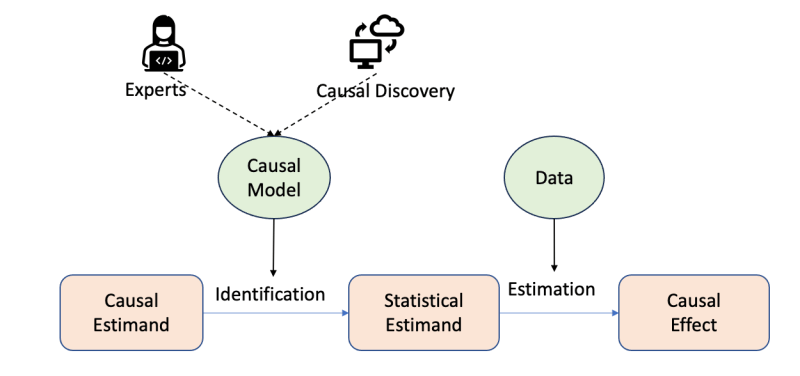
The practical implementation of causal alternatives relies on two intertwined processes: identification and estimation. Identification involves constructing a causal graph that captures all relevant variables and their interrelations. Estimation then applies statistical or algorithmic techniques—such as propensity score matching, instrumental variables, or Bayesian networks—to quantify the strength and direction of each causal link.
Once quantified, analysts generate counterfactual scenarios by modifying the graph—altering decision nodes or exogenous shocks—to simulate how alternative actions would influence outcomes. This iterative process yields a spectrum of predicted effects, each annotated with confidence measures and sensitivity analyses.

Key Benefits and Crucial Impact
The adoption of causal alternatives delivers tangible benefits across multiple dimensions. Strategically, it enhances decision quality by exposing hidden dependencies and revealing leverage points that traditional models may overlook. Operationally, it informs resource allocation, risk mitigation, and contingency planning with greater fidelity.
Moreover, causal alternatives foster a culture of proactive learning. By continuously testing and validating alternative pathways, organizations develop adaptive strategies that evolve in tandem with shifting market dynamics and technological landscapes.
“The road to wisdom is paved with choices that reflect cause and effect.” – Anonymous
Major Advantages
- Robust risk assessment through multi‑path scenario analysis.
- Enhanced strategic foresight by identifying high‑impact leverage points.
- Improved operational efficiency via targeted resource allocation.
- Greater adaptability to emergent uncertainties and disruptions.
- Strengthened stakeholder confidence through transparent causal reasoning.
Comparative Analysis
| Feature | Causal Alternatives |
|---|---|
| Predictive Focus | Multivariate, scenario‑based |
| Data Requirement | Rich, contextual datasets |
| Decision Complexity | High, requires causal expertise |
| Outcome Transparency | Clear causal pathways |
Future Trends and Innovations
Emerging technologies promise to elevate causal alternatives to unprecedented levels of sophistication. Explainable AI and interpretable machine learning models are increasingly capable of generating causal graphs from raw data, reducing the burden on domain experts and accelerating deployment.
Simultaneously, the integration of quantum computing with causal inference could unlock the ability to process vast combinatorial spaces of alternative pathways, delivering near‑real‑time scenario analysis for high‑stakes decisions in finance, healthcare, and national security.
Conclusion
As the complexity of global systems intensifies, the value of causal alternatives becomes ever clearer. By embracing a framework that recognizes multiple cause‑effect routes, decision‑makers can navigate uncertainty with confidence, craft resilient strategies, and anticipate the ripple effects of their actions.
Future advancements in computational power and causal discovery will further democratize access to this powerful toolset, ensuring that organizations of all sizes can benefit from a richer understanding of the causal fabric that underpins their operations.
Comprehensive FAQs
Q: What distinguishes causal alternatives from traditional predictive models?
A: Traditional predictive models often assume a single deterministic outcome given a set of inputs. Causal alternatives, by contrast, explicitly map multiple potential effects that arise from the same decision point, allowing analysts to evaluate a range of plausible outcomes.
Q: How can small businesses implement causal alternatives without extensive data?
A: Even with limited data, small businesses can start by constructing a simplified causal graph based on expert knowledge and observed patterns. Incremental data collection and iterative refinement of the graph enable gradual expansion of the alternative pathways.
Q: What role does machine learning play in identifying causal alternatives?
A: Machine learning algorithms can uncover hidden relationships and suggest potential causal links that may not be evident through manual analysis. When combined with causal inference techniques, these algorithms help generate robust alternative pathways.
Q: Are there ethical concerns associated with causal alternatives?
A: Yes. Misinterpreting causal pathways or overreliance on automated models can lead to unintended biases. Ethical implementation requires transparency, rigorous validation, and continuous stakeholder engagement.
Q: How frequently should organizations revisit their causal alternative models?
A: In dynamic environments, revisiting the models quarterly or after significant market shifts ensures that the causal graphs remain aligned with current realities and continue to provide actionable insights.
Q: Can causal alternatives be integrated with existing decision‑support systems?
A: Absolutely. By embedding causal graphs and scenario outputs into dashboards or recommendation engines, organizations can enrich their decision‑support systems with a deeper causal perspective, enhancing overall decision quality.
Leave a Comment
Comments are moderated before appearing. The data you submit is processed according to the Privacy Policy of Industriaanimacion.