Database Management Tips for Military: Precision & Security
Table of Contents
- The Complete Overview of Database Management Tips for Military
- Historical Background and Evolution
- Core Mechanisms: How It Works
- Key Benefits and Crucial Impact
- Major Advantages
- Comparative Analysis
- Future Trends and Innovations
- Conclusion
- Comprehensive FAQs
- Q: What are the most critical security practices for military databases?
- Q: How can redundancy be achieved without compromising classified data?
- Q: What role does AI play in future military database management?
- Q: How do military databases comply with NIST and DoD standards?
- Q: What strategies support data integrity in distributed military operations?
Military operations hinge upon real‑time information, and the infrastructure that supports this data must be as robust and adaptive as the forces it serves. In high‑stakes environments, a single database outage can cascade into operational failure, jeopardizing missions and national security. Consequently, disciplined database management practices are indispensable for safeguarding sensitive intelligence, coordinating logistics, and ensuring mission continuity.
Beyond mere storage, military databases must integrate stringent security protocols, rigorous audit trails, and fault‑tolerant architectures. The unique blend of classified data, distributed command structures, and rapid deployment requirements demands a holistic approach that balances performance, compliance, and resilience. This article outlines actionable strategies, evaluates prevailing solutions, and projects forthcoming innovations tailored to the defense sector.
By systematically applying these database management tips for military contexts, organizations can reduce risk, improve data integrity, and maintain a decisive edge in an era where information superiority defines strategic advantage.

The Complete Overview of Database Management Tips for Military
Effective database governance in the military domain begins with a foundation of clear policies and standardized procedures. These guidelines dictate everything from data classification levels to permissible access protocols, ensuring that every stakeholder operates within a well‑defined framework. Coupled with this policy layer, a technical stack that supports high availability, rapid scaling, and offline resilience becomes critical, especially in field conditions where connectivity is intermittent.
Implementation of these best practices requires a coordinated effort across multiple domains: IT, operations, intelligence, and compliance teams. Regular training, simulation drills, and continuous monitoring create a culture of accountability, enabling personnel to respond swiftly to anomalies and maintain operational tempo.
Historical Background and Evolution
The origins of military database systems can be traced back to the Cold War era, when early mainframe computers managed strategic data such as missile trajectories and communications logs. At that time, the focus was on batch processing and centralized data centers, with limited emphasis on distributed or mobile solutions.
Over the past few decades, the proliferation of networked sensors, unmanned platforms, and real‑time intelligence has transformed the data landscape. Modern military databases now support complex analytics, machine learning pipelines, and cross‑domain data fusion, necessitating agile architectures and stringent security measures that were absent in earlier generations.
Core Mechanisms: How It Works
At its core, military database management hinges on a layered architecture that separates data storage, processing, and access control. The storage layer often employs relational models for structured data such as personnel records, while NoSQL or graph databases handle unstructured or relational intelligence feeds. This hybrid approach allows for optimal query performance and flexibility.
Access control is enforced through role‑based security models, where clearance levels dictate permissible operations. Encryption at rest and in transit, coupled with hardware security modules (HSMs), protects against both external intrusions and insider threats. Continuous monitoring, automated threat detection, and real‑time alerts form the reactive component that ensures ongoing integrity.
Key Benefits and Crucial Impact
Adhering to rigorous database management tips for military environments yields measurable improvements in operational readiness, threat mitigation, and strategic agility. These benefits translate into tangible gains, such as reduced mission downtime, enhanced data fidelity, and compliance with stringent defense standards.
Moreover, a disciplined data strategy reduces the need for costly reactive fixes, enabling commanders to allocate resources toward higher‑value initiatives rather than firefighting infrastructure failures.
“Data is the new battlefield; how you protect it determines your advantage.” — Defense Data Analytics Institute
Major Advantages
- Operational Continuity: High‑availability architectures ensure that critical data remains accessible even during infrastructure disruptions.
- Enhanced Security Posture: Multi‑layer encryption, strict access controls, and continuous monitoring mitigate both cyber and physical threats.
- Regulatory Compliance: Alignment with frameworks such as NIST SP 800‑53, DoD 8510.1, and FISMA guarantees adherence to federal mandates.
- Data Integrity: Automated checksum verification, transaction logging, and immutable audit trails preserve the accuracy of classified information.
- Scalable Intelligence: Modular, cloud‑compatible designs accommodate growing data volumes without compromising performance.
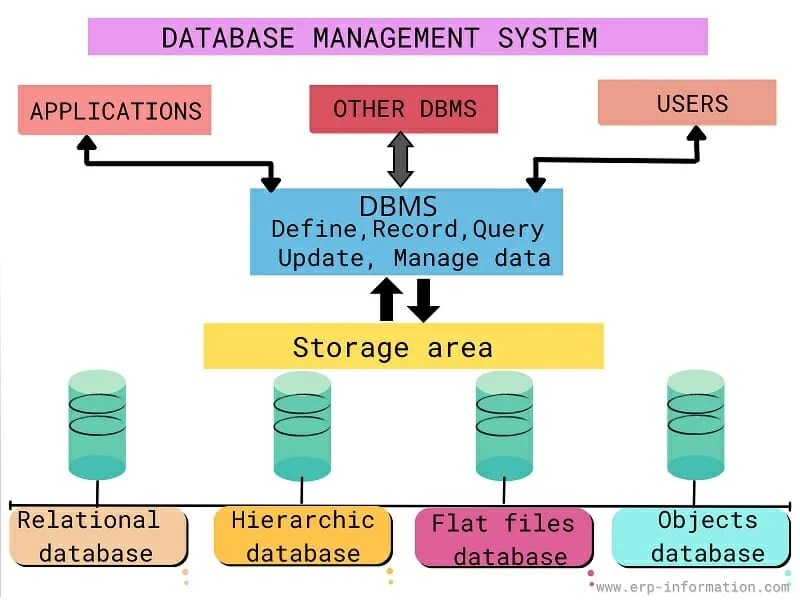
Comparative Analysis
| Feature | Relational (SQL) |
|---|---|
| Data Structure | Schema‑driven, table‑based |
| Feature | NoSQL / Graph |
| Data Structure | Schema‑flexible, document or node‑based |
| Feature | Hybrid Cloud |
| Data Structure | Combination of on‑prem and cloud resources |
| Feature | Edge‑Optimized |
| Data Structure | Distributed, low‑latency storage for field units |
Future Trends and Innovations
Emerging technologies such as quantum‑resistant cryptography and homomorphic encryption are poised to redefine how military databases safeguard data against next‑generation adversaries. As quantum computing threatens to break current asymmetric algorithms, integrating post‑quantum key exchange protocols will become mandatory for high‑risk environments.
Additionally, the adoption of AI‑driven database orchestration promises autonomous scaling, predictive failure mitigation, and real‑time compliance monitoring. Coupled with on‑demand edge analytics, these advancements enable commanders to process intelligence on‑the‑fly, regardless of satellite or network availability.

Conclusion
In the defense sector, data is as strategic as weapons; managing it with precision, security, and foresight is non‑negotiable. By embracing the outlined database management tips for military contexts—rigorous policy frameworks, hybrid architectures, and cutting‑edge security measures—organizations can ensure that information remains a decisive asset rather than a vulnerability.
As technology evolves, continuous refinement of these practices will be essential. The future of military operations depends on the reliability and integrity of the data systems that underpin decision‑making, making disciplined database stewardship a cornerstone of national security.
Comprehensive FAQs
Q: What are the most critical security practices for military databases?
A: Prioritize multi‑layer encryption (both at rest and in transit), enforce strict role‑based access controls aligned with clearance levels, implement hardware security modules (HSMs) for key management, and maintain continuous monitoring with automated threat detection. Regular penetration testing and compliance audits further reinforce the security posture.
Q: How can redundancy be achieved without compromising classified data?
A: Deploy geographically diverse, isolated data centers that adhere to the same security standards. Use secure replication protocols with end‑to‑end encryption and ensure that backup media are stored in classified facilities. Implement automatic failover mechanisms that do not expose data during switchover.
Q: What role does AI play in future military database management?
A: AI can automate routine maintenance tasks, predict hardware failures, optimize query performance, and detect anomalous access patterns indicative of insider threats or breaches. In edge environments, AI‑driven analytics can process data locally, reducing latency and dependency on insecure networks.
Q: How do military databases comply with NIST and DoD standards?
A: Compliance is achieved by mapping system controls to NIST SP 800‑53 families, implementing continuous monitoring as required by DoD 8510.1, and conducting regular vulnerability assessments. Documentation of all controls and evidence of their operation is essential for audit readiness.
Q: What strategies support data integrity in distributed military operations?
A: Employ distributed ledger technologies for immutable audit trails, use transaction logs with checksum verification, enforce strict data validation rules, and schedule periodic data integrity checks across all nodes. Additionally, implement secure synchronization protocols that prevent unauthorized data alterations during transit.
Leave a Comment
Comments are moderated before appearing. The data you submit is processed according to the Privacy Policy of Industriaanimacion.