DevOps vs AI: Shaping the Future of Software Delivery
Table of Contents
- The Complete Overview of devops vs ai
- Historical Background and Evolution
- Core Mechanisms: How It Works
- Key Benefits and Crucial Impact
- Major Advantages
- Comparative Analysis
- Future Trends and Innovations
- Conclusion
- Comprehensive FAQs
- Q: How does AI enhance traditional DevOps pipelines?
- Q: Can AI replace human oversight in DevOps?
- Q: What types of AI models are most useful for DevOps?
- Q: How do I start integrating AI into my DevOps workflow?
- Q: What are the biggest challenges in combining DevOps and AI?
When software teams aim to release new features faster, they often turn to DevOps for streamlined pipelines and continuous delivery. Yet, the same teams are increasingly turning to artificial intelligence to predict failures, automate testing, and recommend optimal configurations. The intersection of these two domains—DevOps and AI—is redefining how applications are built, tested, deployed, and monitored.
In large enterprises, the pressure to ship code quickly while maintaining quality has created a fertile ground for AI to augment DevOps workflows. Machine learning models analyze vast volumes of telemetry, code commits, and deployment logs to surface hidden patterns. Predictive analytics can flag risky changes before they reach production, while natural language processing helps triage support tickets and extract actionable insights from user feedback.
Conversely, DevOps provides the necessary infrastructure, culture, and data pipelines that allow AI to function effectively. Continuous integration and continuous deployment (CI/CD) pipelines generate the real‑time data streams that feed AI models. By embedding AI into these pipelines, organizations can move from reactive incident response to proactive, data‑driven governance. This synergy—often described as “DevOps vs AI” in industry conversations—offers a compelling future for software engineering.
The Complete Overview of devops vs ai
DevOps, an amalgamation of development and operations, prioritizes collaboration, automation, and rapid feedback loops. Its core goal is to reduce the cycle time from code commit to production deployment. AI, on the other hand, encompasses a spectrum of techniques—from rule‑based systems to deep neural networks—that enable machines to learn from data, make predictions, and carry out complex tasks without explicit programming.
When these paradigms converge, the resulting ecosystem leverages AI’s analytical prowess to enhance DevOps processes. From intelligent test selection and automated remediation to adaptive resource provisioning, the combination transforms static pipelines into dynamic, self‑optimizing systems. The term “devops vs ai” often surfaces in discussions about whether AI should replace human oversight, but the prevailing view is that AI acts as an accelerator, not a substitute.
Historical Background and Evolution
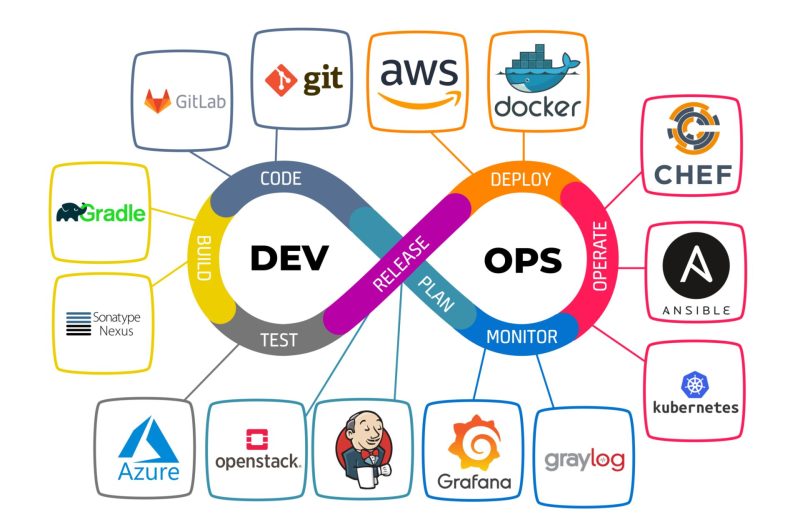
DevOps emerged in the early 2000s as a response to the siloed nature of traditional software development and IT operations. By championing shared responsibility and continuous delivery, it addressed the latency between code creation and deployment. The movement gained traction with the adoption of open‑source tools such as Jenkins, Docker, and Kubernetes, which automated building, testing, and orchestrating containers at scale.
AI’s journey into software engineering began with rule‑based systems and evolved into machine learning models capable of ingesting terabytes of data. The last decade has seen AI permeate every layer of the stack: from code analysis tools like DeepCode to infrastructure‑as‑code validators and automated incident responders. As AI matured, teams began embedding these capabilities directly into their DevOps pipelines, giving rise to the intertwined practices observed today.
Core Mechanisms: How It Works
At its core, the integration of AI into DevOps follows a data‑driven loop. First, the pipeline collects telemetry—build times, test coverage, deployment frequencies, error rates, and infrastructure metrics. This data feeds machine learning models that learn historical patterns and derive predictive signals. For instance, anomaly detection algorithms can flag abnormal latency spikes, while reinforcement learning agents can suggest optimal scaling strategies.
Second, the AI component acts upon the insights. Automated remediation scripts may roll back a problematic deployment, adjust resource allocations, or trigger additional tests. Human operators receive prioritized alerts, contextualized by AI explanations, allowing them to focus on high‑impact decisions. This feedback loop continually refines the models, creating a self‑learning ecosystem that adapts to evolving codebases and operational conditions.
Key Benefits and Crucial Impact
Coupling DevOps with AI unlocks a spectrum of advantages that directly translate into business value. Faster time‑to‑market, higher system reliability, and reduced operational costs are among the most cited benefits. Moreover, AI‑enhanced DevOps promotes a culture of continuous improvement, where data informs every stage of the development lifecycle.
“Automation is not the end; it’s the beginning of a smarter, more resilient delivery pipeline.” – Industry Thought Leader
Major Advantages
- Predictive Reliability: AI models anticipate failures by analyzing code changes, environmental variables, and historical incidents, allowing teams to address issues before deployment.
- Optimized Resource Allocation: Reinforcement learning and predictive scaling reduce over‑provisioning, leading to cost savings and energy efficiency.
- Intelligent Testing: Machine learning selects the most relevant test suites based on code churn and risk assessment, shortening feedback cycles.
- Automated Incident Response: AI triages alerts, correlates logs, and even executes remediation scripts, minimizing mean time to resolution.
- Enhanced Visibility: Natural language interfaces translate complex telemetry into actionable insights, bridging the gap between engineers and business stakeholders.

Comparative Analysis
| Aspect | DevOps Alone |
|---|---|
| Automation Scope | Build, test, deploy pipelines |
| Decision Support | Rule‑based triggers, manual reviews |
| Scalability | Manual or scripted scaling |
| Predictive Insight | Limited, relies on historical thresholds |
| Operational Cost | Dependent on human oversight |
| Aspect | DevOps + AI Integration |
| Automation Scope | End‑to‑end, including monitoring and remediation |
| Decision Support | Data‑driven, continuous learning models |
| Scalability | Auto‑scaling guided by predictive analytics |
| Predictive Insight | Real‑time anomaly detection, risk scoring |
| Operational Cost | Optimized, reduced manual interventions |
Future Trends and Innovations
The convergence of DevOps and AI is poised to deepen as generative models mature and edge computing expands. Generative AI can produce infrastructure‑as‑code templates tailored to specific workloads, while reinforcement learning agents may autonomously manage multi‑cloud deployments, negotiating service level agreements in real time. The rise of AI‑native platforms—where AI capabilities are built into every layer of the stack—will further blur the distinction between DevOps practices and AI-driven automation.
Another emerging trend is the democratization of AI tooling. Low‑code and no‑code platforms will allow non‑technical stakeholders to define business rules that AI systems enforce across the delivery pipeline. This shift will foster a more inclusive culture, where domain experts directly influence the automation logic that governs software deployments. As organizations adopt these innovations, the phrase “devops vs ai” will evolve from a comparison to a complementary partnership.

Conclusion
DevOps and AI are not adversaries but collaborators. By embedding AI into DevOps pipelines, teams gain predictive visibility, automated remediation, and efficient resource utilization. The integration transforms traditional release cycles into adaptive, data‑driven processes that respond to changes in real time. As the technology landscape progresses, the synergy between these domains will become the standard for resilient, high‑velocity software delivery.
Ultimately, enterprises that invest in both robust DevOps foundations and advanced AI capabilities position themselves at the forefront of innovation. The future of software engineering hinges on this partnership, where automation meets intelligence, delivering faster, safer, and more efficient outcomes for businesses and users alike.
Comprehensive FAQs
Q: How does AI enhance traditional DevOps pipelines?
A: AI augments DevOps by providing predictive analytics, intelligent test selection, automated incident response, and dynamic resource scaling. These capabilities transform static pipelines into adaptive systems that learn from data and optimize operations continuously.
Q: Can AI replace human oversight in DevOps?
A: AI is designed to augment rather than replace human decision‑making. While it can automate routine tasks and surface insights, critical judgments—such as final release approvals, security strategy, and architectural decisions—still rely on experienced engineers and stakeholders.
Q: What types of AI models are most useful for DevOps?
A: Common models include anomaly detection algorithms for monitoring, reinforcement learning agents for scaling decisions, supervised classifiers for risk scoring, and natural language processing tools for log analysis and ticket triage.
Q: How do I start integrating AI into my DevOps workflow?
A: Begin by instrumenting your pipeline to capture telemetry, then experiment with simple predictive models (e.g., regression or classification) to identify deployment risks. Gradually incorporate more sophisticated AI, such as reinforcement learning for auto‑scaling, and ensure you maintain clear governance and explainability.
Q: What are the biggest challenges in combining DevOps and AI?
A: Key challenges include data quality and availability, ensuring model interpretability, managing model drift over time, aligning AI outputs with business objectives, and fostering a culture that embraces continuous learning and experimentation.
Leave a Comment
Comments are moderated before appearing. The data you submit is processed according to the Privacy Policy of Industriaanimacion.