nodejs websocket: Building Real‑Time Applications with Ease
Table of Contents
- nodejs websocket: Building Real‑Time Applications with Ease
- The Complete Overview of nodejs websocket
- Historical Background and Evolution
- Core Mechanisms: How It Works
- Key Benefits and Crucial Impact
- Major Advantages
- Comparative Analysis
- Future Trends and Innovations
- Conclusion
- Comprehensive FAQs
- Q: How does a nodejs websocket differ from a typical HTTP request?
- Q: What are the main security considerations when using nodejs websocket?
- Q: Can I use nodejs websocket in a browser that does not support native WebSocket?
- Q: How do I scale a nodejs websocket application across multiple servers?
- Q: Is nodejs websocket suitable for mobile applications?

nodejs websocket: Building Real‑Time Applications with Ease
Real‑time communication has become a cornerstone of modern web experiences. From collaborative editors to live sports feeds, the demand for instant data exchange pushes developers to adopt efficient, low‑latency solutions. Node.js, with its event‑driven, non‑blocking I/O model, naturally complements this need.
At the heart of many real‑time systems lies the WebSocket protocol, an evolution of the classic HTTP request/response paradigm. While HTTP remains vital for page loads and API calls, WebSocket offers bi‑directional, full‑duplex channels that stay open, allowing servers to push updates to clients without repeated polling.
In this article we dissect the mechanics of nodejs websocket implementations, evaluate their impact, compare alternatives, and look ahead to emerging patterns that will shape the next wave of interactive web applications.
The Complete Overview of nodejs websocket
Node.js websocket integration typically revolves around the ws library, the de‑facto standard for establishing socket connections in server‑side JavaScript. By combining the http module with ws, developers can upgrade a traditional HTTP request into a persistent WebSocket session, thereby enabling continuous data flow between client and server.
Beyond the basic library, several higher‑level abstractions exist. Frameworks such as Socket.io stack atop ws to provide fallback transports (long polling, server‑sent events) for browsers that lack native support, and offer convenient event‑based APIs that simplify message routing, room management, and authentication.
Historical Background and Evolution
The WebSocket specification emerged from the WebSocket Working Group in 2011, codified as RFC 6455. Its goal was to solve the inherent limitations of HTTP for real‑time applications by allowing a single TCP connection to carry multiple messages in both directions. Early experiments used custom protocols like Comet, but they were fragile and difficult to scale.
Node.js entered the scene in 2009, bringing an event loop architecture that made handling thousands of concurrent connections feasible. The first WebSocket implementations in Node tied into the native http module, but it wasn’t until the release of ws in 2012 that developers gained a lightweight, standards‑compliant library they could rely on. Since then, WebSocket has become a staple in the Node.js ecosystem, with numerous middleware and community tools enhancing its capabilities.
Core Mechanisms: How It Works
The WebSocket handshake starts as an HTTP request containing an Upgrade: websocket header. If the server accepts, it responds with a 101 Switching Protocols status, and the TCP socket is upgraded to a raw WebSocket stream. From that point, data frames are exchanged without the overhead of HTTP headers, providing minimal latency.
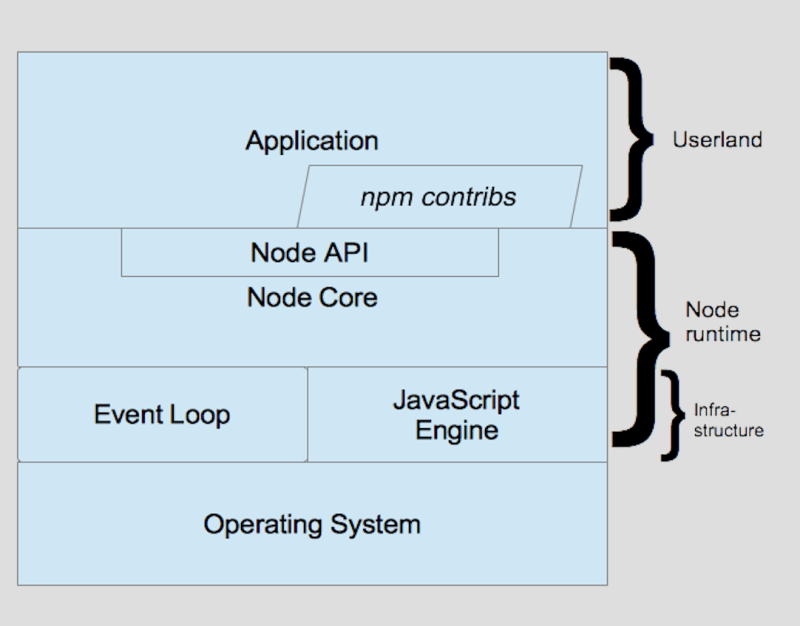
Node.js handles these frames asynchronously: each incoming message triggers a 'message' event, while outgoing data is written to the socket buffer. Internally, the ws library implements framing, masking, and compression per RFC 6455, ensuring compatibility across browsers and intermediaries such as proxies and load balancers.
Key Benefits and Crucial Impact
The primary advantage of nodejs websocket lies in its ability to deliver instant feedback to users, turning static web pages into dynamic, interactive experiences. Whether it’s a trading dashboard updating every millisecond or a multiplayer game synchronizing player positions, WebSocket reduces round‑trip times to near zero.
Moreover, the server‑side event loop of Node.js allows a single process to manage thousands of open connections, translating into lower hardware costs compared to traditional multi‑threaded servers that spawn a thread per client. This scalability, coupled with the simplicity of JavaScript on both client and server, accelerates development cycles.
“WebSocket turns the web into a platform for instant, real‑time interaction.” – WebSocket Working Group
Major Advantages
- Low latency: persistent connections eliminate HTTP overhead.
- Scalable concurrency: event‑driven architecture handles many clients in a single thread.
- Bidirectional communication: server can push updates without client requests.
- Broad browser support: native WebSocket APIs in all modern browsers.
- Rich ecosystem: libraries like Socket.io provide fallbacks, rooms, and authentication out of the box.
Comparative Analysis
| Feature | nodejs websocket (ws) |
|---|---|
| Protocol Support | RFC 6455 compliant WebSocket |
| Fallback Transport | No native fallback – requires external polyfills |
| Performance | High throughput, minimal overhead |
| Ease of Use | Low‑level API; steep learning curve for complex patterns |
| Security | TLS support via wss://, requires manual handling of certificates |
| Community & Maintenance | Actively maintained, widespread adoption |

Future Trends and Innovations
The next wave of WebSocket usage is likely to intertwine with emerging browser APIs such as WebTransport, which promises even lower latency and better congestion control. Node.js developers can experiment with undici and fetch polyfills to integrate WebTransport in server‑side code, potentially replacing WebSocket for some use cases.
Additionally, the rise of edge computing and serverless platforms is reshaping how real‑time services are deployed. Cloudflare Workers, Vercel Edge Functions, and AWS Lambda@Edge now support WebSocket connections, enabling ultra‑low‑latency, globally distributed socket hubs that scale automatically with traffic. As these platforms mature, developers will increasingly offload heavy lifting to the edge, leaving Node.js applications to focus on business logic and real‑time orchestration.
Conclusion
Nodejs websocket has proven itself as a reliable, high‑performance backbone for modern real‑time web applications. Its synergy with Node.js’s event loop, combined with a mature ecosystem of libraries, makes it a compelling choice for developers seeking instant, bidirectional communication.
Looking ahead, the integration of WebTransport, edge deployments, and enhanced tooling will push the boundaries of what is possible with real‑time data. Whether you’re building a collaborative editor, a live analytics dashboard, or a multiplayer game, mastering nodejs websocket fundamentals will remain essential for delivering responsive, engaging user experiences.
Comprehensive FAQs
Q: How does a nodejs websocket differ from a typical HTTP request?
A: A nodejs websocket starts with an HTTP request that is upgraded to a persistent, full‑duplex connection. Unlike HTTP, which follows a request/response model per transaction, WebSocket allows continuous data exchange without re‑establishing a connection for each message.
Q: What are the main security considerations when using nodejs websocket?
A: Secure WebSocket connections (wss://) require TLS certificates and proper validation of origins to prevent cross‑site attacks. Additionally, authentication tokens should be validated on the server, and message content should be sanitized to avoid injection attacks.
Q: Can I use nodejs websocket in a browser that does not support native WebSocket?
A: Yes. Libraries such as Socket.io provide fallback transports like long polling or server‑sent events, ensuring compatibility with older browsers that lack native WebSocket support.
Q: How do I scale a nodejs websocket application across multiple servers?
A: Implement a message broker (e.g., Redis Pub/Sub, RabbitMQ) to synchronize state across instances. The socket.io library offers adapters like socket.io-redis that automatically forward events between nodes, enabling horizontal scaling.
Q: Is nodejs websocket suitable for mobile applications?
A: Absolutely. Mobile browsers support WebSocket, and native mobile SDKs can use libraries like Socket.io-Client or ws for Node.js server interactions, providing low‑latency communication for real‑time features.
Leave a Comment
Comments are moderated before appearing. The data you submit is processed according to the Privacy Policy of Industriaanimacion.