proxy rotation api: The Engine Behind Effortless Data Scraping
Table of Contents
- How Proxy Rotation API Powers Seamless Data Collection and Automation
- The Complete Overview of Proxy Rotation API
- Historical Background and Evolution
- Core Mechanisms: How It Works
- Key Benefits and Crucial Impact
- Major Advantages
- Comparative Analysis
- Future Trends and Innovations
- Conclusion
- Comprehensive FAQs
- Q: What is a proxy rotation api and how does it differ from a traditional proxy server?
- Q: How can I integrate a proxy rotation api into my existing web scraping framework?
- Q: Are there legal or ethical considerations when using proxy rotation for data collection?
- Q: What performance impact does proxy rotation introduce, and how can it be mitigated?
- Q: Can proxy rotation APIs support SSL/TLS interception for inspecting encrypted traffic?

How Proxy Rotation API Powers Seamless Data Collection and Automation
In the age of information overload, businesses and developers alike face a constant battle against IP bans, CAPTCHAs, and rate limits. When harvesting data from websites, a single static IP can quickly become a liability, leading to blocked requests and incomplete datasets. Enter the proxy rotation api, a technology that dynamically swaps IP addresses to maintain a steady flow of requests without tripping security defenses.
Beyond simple IP rotation, modern proxy rotation services offer sophisticated features such as geographic targeting, anonymity levels, and session persistence. These capabilities enable tasks ranging from price monitoring for e-commerce platforms to real‑time sentiment analysis across social media channels. By abstracting the complexity of network management, developers can focus on business logic rather than network throttling.
Yet, not all proxy solutions are created equal. Some provide only a single pool of IPs, while others integrate with cloud infrastructure for elastic scaling. Understanding the nuances of proxy rotation api offerings is essential for building resilient, scalable, and ethical scraping pipelines.
The Complete Overview of Proxy Rotation API
A proxy rotation API acts as a gateway between a client application and a pool of proxy servers. When a request is sent, the API selects an appropriate IP, routes the request, and returns the response. The selection logic can be simple round‑robin or complex algorithms that consider latency, country, and usage quotas.
Unlike traditional proxy servers, which require manual configuration and maintenance, a proxy rotation API offers programmatic control. Developers can set rotation intervals, define IP pools, and monitor usage metrics—all through RESTful endpoints. This level of automation reduces operational overhead and increases reliability.
Historical Background and Evolution
Proxy servers date back to the early 1990s, initially designed for caching and content filtering. Early implementations were static: a single proxy address served all requests, making them vulnerable to detection and blocking. As the internet evolved, the need for dynamic, multi‑IP strategies grew, especially with the rise of web scraping and bot automation.
In the mid‑2010s, the proliferation of cloud providers and the advent of containerized workloads accelerated the development of proxy rotation services. These platforms leveraged micro‑services architectures to spin up thousands of proxy instances on demand, enabling near real‑time IP rotation. Today, proxy rotation APIs are integral to data‑driven businesses, providing the backbone for services like market intelligence, ad verification, and SEO monitoring.
Core Mechanisms: How It Works
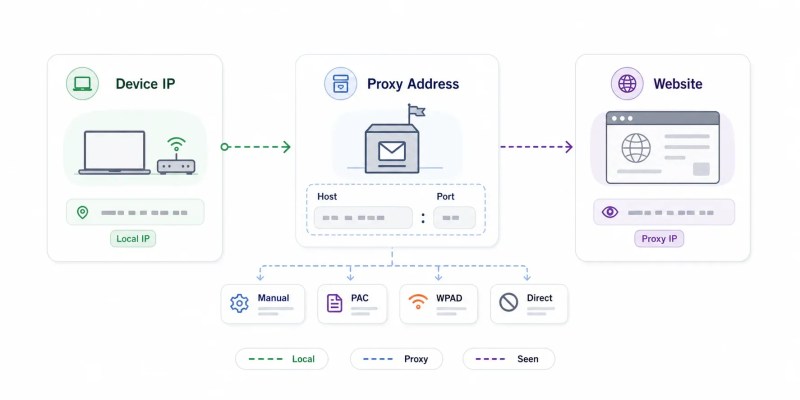
At its core, a proxy rotation API operates on a three‑layer model: the client, the API gateway, and the proxy pool. The client sends an HTTP request to the gateway, which authenticates the request, selects an IP based on the defined rotation policy, and forwards the request to the chosen proxy. The response travels back through the same path, ensuring that the client remains unaware of the underlying IP changes.
Rotation policies can be fine‑tuned. For instance, a “sticky” policy might keep the same IP for a session, while a “random” policy could pick a new IP for each request. Additionally, APIs expose health checks to detect and retire malfunctioning proxies, ensuring that only healthy endpoints participate in the rotation cycle.
Key Benefits and Crucial Impact
Employing a proxy rotation api transforms the way organizations approach data acquisition. By mitigating IP‑based restrictions, it unlocks previously inaccessible data streams. Moreover, automated rotation reduces manual intervention, leading to cost savings and faster time‑to‑market for data‑centric products.
Beyond operational advantages, proxy rotation APIs also enhance ethical compliance. Many websites enforce usage limits to preserve server resources. Rotating IPs responsibly allows developers to spread load, aligning with best practices and reducing the risk of legal scrutiny.
"The real power of a proxy rotation api lies not just in avoiding blocks, but in enabling a sustainable, scalable approach to data collection." — Data Engineering Lead, Tech Insights
Major Advantages
- Scalability: Automatically scale the number of IPs to match traffic demands.
- Reliability: Health checks and auto‑failover ensure continuous operation.
- Geographic Targeting: Access region‑specific content by selecting IPs from desired locales.
- Reduced Maintenance: No manual server provisioning or IP management.
- Compliance & Ethics: Spread traffic load to respect target site limits.
Comparative Analysis
| Feature | Proxy Rotation API |
|---|---|
| Dynamic IP Management | Automatic rotation with configurable intervals |
| Geolocation Control | Choose IP pools by country or region |
| Health Monitoring | Built‑in proxy health checks and auto‑recovery |
| Ease of Integration | RESTful endpoints, SDKs, and webhook support |

Future Trends and Innovations
As machine learning models become more adept at detecting bot traffic, proxy rotation APIs will integrate adaptive algorithms that predict and preempt blocks. Real‑time analytics dashboards will offer granular visibility into IP performance, allowing developers to fine‑tune rotation strategies on the fly.
Serverless architectures and edge computing will further decentralize proxy networks, bringing IPs closer to data sources and reducing latency. Additionally, privacy regulations such as GDPR will push providers to offer enhanced anonymization, ensuring that data collectors comply with user consent and data protection mandates.
Conclusion
The proxy rotation api has evolved from a simple workaround to a strategic asset for data‑centric enterprises. By automating IP rotation, managing health, and providing granular control, it empowers developers to build resilient, ethical, and high‑performance scraping pipelines.
As the digital landscape continues to tighten security and enforce stricter usage policies, those who harness the full potential of proxy rotation APIs will maintain a competitive edge, unlocking insights that were once locked behind barriers.
Comprehensive FAQs
Q: What is a proxy rotation api and how does it differ from a traditional proxy server?
A: A proxy rotation api is a programmatic interface that automatically swaps IP addresses from a pool for each request or session, whereas a traditional proxy server uses a single static IP. The API handles dynamic selection, health checks, and integration, eliminating manual configuration.
Q: How can I integrate a proxy rotation api into my existing web scraping framework?
A: Most providers offer RESTful endpoints or SDKs in languages like Python, Node.js, or Java. You typically set the proxy endpoint in your HTTP client, provide authentication credentials, and configure rotation policies in the API settings. The client then routes all requests through the API gateway.
Q: Are there legal or ethical considerations when using proxy rotation for data collection?
A: Yes. While proxy rotation can help avoid IP bans, it does not exempt you from respecting a website’s terms of service or robots.txt directives. Ethical use involves limiting request rates, respecting data ownership, and ensuring compliance with privacy regulations such as GDPR.
Q: What performance impact does proxy rotation introduce, and how can it be mitigated?
A: Each hop through a proxy adds latency, and large rotation pools can increase overhead. Mitigation strategies include selecting geographically close IPs, using edge proxies, and employing connection pooling to reduce handshake costs.
Q: Can proxy rotation APIs support SSL/TLS interception for inspecting encrypted traffic?
A: Some advanced providers offer SSL/TLS interception, allowing you to view the content of HTTPS requests. This requires installing a trusted certificate in the client environment and may raise security concerns. Always ensure that interception complies with privacy laws and user consent.
Leave a Comment
Comments are moderated before appearing. The data you submit is processed according to the Privacy Policy of Industriaanimacion.