devops vs ops: When Collaboration Wins
Table of Contents
- devops vs ops: When Collaboration Wins
- The Complete Overview of devops vs ops
- Historical Background and Evolution
- Core Mechanisms: How It Works
- Key Benefits and Crucial Impact
- Major Advantages
- Comparative Analysis
- Future Trends and Innovations
- Conclusion
- Comprehensive FAQs
- Q: What is the fundamental difference between DevOps and Ops?
- Q: Can an organization adopt only DevOps practices without revising Ops?
- Q: How does DevOps reduce the mean time to recovery (MTTR)?
- Q: What role does culture play in the DevOps vs Ops conversation?
- Q: Are there risks associated with fully embracing DevOps?
devops vs ops: When Collaboration Wins
In the realm of software engineering, the debate between devops vs ops has sharpened the focus on agility, reliability, and speed. Teams that once worked in silos are now converging to meet market demands, and the terminology reflects a deeper shift in mindset and practice. The conversation is not merely semantic; it signals a strategic transformation in how organizations deliver value.
While operations traditionally emphasized stability, DevOps seeks to embed development insights into every operational layer. This fusion demands new tooling, revised processes, and, most critically, a cultural realignment that empowers cross-functional accountability.
Understanding the nuances of devops vs ops equips leaders to decide whether to adopt a hybrid model, fully embrace DevOps, or retain a classic operations framework. The decision hinges on risk tolerance, product complexity, and the organizational appetite for change.
The Complete Overview of devops vs ops
At its core, devops vs ops contrasts two philosophies: one that prioritizes continuous integration and delivery, and another that focuses on meticulous monitoring and incident response. The former thrives on speed and experimentation; the latter excels in stability and compliance. The interplay between these perspectives determines the architecture of a company's delivery pipeline.
Modern enterprises often adopt a blended approach, where DevOps principles guide the development lifecycle while operational excellence ensures resilience. The evolution from monolithic releases to microservices has amplified the need for this balance, making the distinction between devops and ops more relevant than ever.
Historical Background and Evolution
The term DevOps emerged in the late 2000s as a response to the fragmented software delivery process. Early adopters recognized that code often languished in QA environments, causing delays and misalignments between product and production teams. The movement articulated a set of practices—continuous integration, automated testing, and infrastructure as code—that sought to dissolve the barriers between development and operations.
Conversely, operations teams have long relied on established methodologies such as ITIL, focusing on incident management, change control, and service level agreements. As cloud platforms democratized infrastructure, the operational domain had to adapt, integrating monitoring, observability, and automated scaling to keep pace with rapid deployment cycles.
Core Mechanisms: How It Works
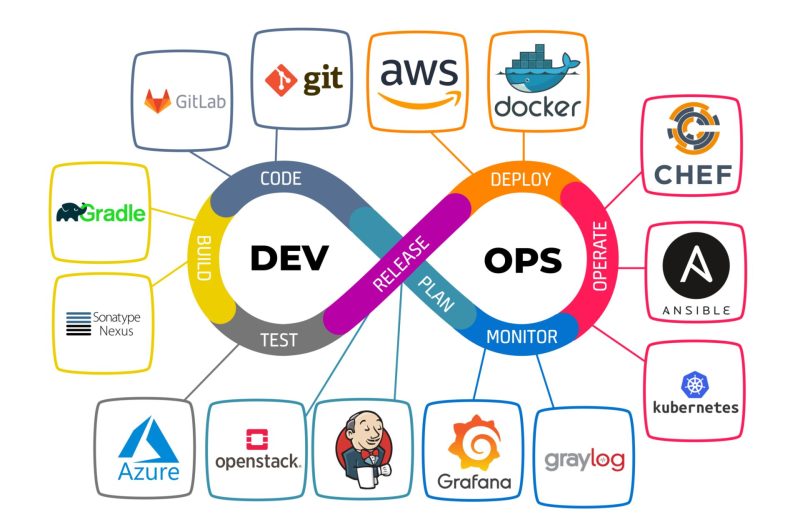
In devops vs ops discussions, the core mechanisms revolve around automation pipelines, version control, and real-time feedback loops. Development teams push code to repositories, triggering automated builds and tests. Successful artifacts are then promoted through staging environments, where operations monitor performance and health metrics before final production release.
Operations inject observability by deploying monitoring agents, logging frameworks, and alerting systems that provide visibility into application behavior. This data feeds back into development, closing the loop and enabling rapid hypothesis testing, rollback, or feature toggling. The result is a tighter feedback cycle that reduces mean time to recovery (MTTR) and enhances product quality.

Key Benefits and Crucial Impact
Adopting a DevOps mindset yields tangible benefits: accelerated release cycles, improved defect detection, and higher customer satisfaction. Equally important, it fosters a culture of shared responsibility, breaking down the “you build it, you break it” mentality that has historically plagued software projects.
From an operational standpoint, the integration of development insights streamlines incident response, reduces toil, and aligns capacity planning with actual usage patterns. The net effect is a more resilient, scalable, and cost-effective delivery pipeline.
“When developers own the entire lifecycle, from code to production, the organization moves from reactive maintenance to proactive innovation.” – Anonymous Industry Leader
Major Advantages
- Speed to Market: Automated pipelines cut release times from weeks to hours.
- Quality Assurance: Continuous testing uncovers defects early, reducing downstream costs.
- Collaboration: Shared ownership fosters mutual accountability and knowledge transfer.
- Observability: Real‑time metrics enable proactive incident prevention and faster debugging.
- Scalability: Infrastructure as code and cloud native practices support elastic scaling.
Comparative Analysis
| Aspect | DevOps |
|---|---|
| Primary Focus | Continuous delivery, automation, and culture integration |
| Process Emphasis | Collaborative pipelines, rapid iteration, and feedback loops |
| Operational Role | Supports and enhances development with monitoring and observability |
| Risk Management | Shift-left testing, feature toggles, and canary releases |

Future Trends and Innovations
The next wave of DevOps evolution will likely intertwine with AI-driven operations—commonly referred to as AIOps. Predictive analytics will suggest optimal scaling actions, automatically resolve incidents, and even generate code patches based on anomaly detection. This automation will further blur the line between development and operations, pushing organizations toward a truly unified delivery stack.
Additionally, the rise of multi-cloud and edge computing environments demands a more granular approach to observability and governance. Teams will need to embed compliance checks directly into CI/CD pipelines, ensuring that security and regulatory constraints are enforced as code, not as post-deployment manual tasks.
Conclusion
The debate between devops vs ops is less about choosing one over the other and more about orchestrating a symbiotic relationship. By aligning development velocity with operational reliability, organizations can deliver higher quality software faster while maintaining the stability required by modern users.
Ultimately, the most successful enterprises will treat DevOps and Operations not as competing silos but as complementary pillars that together form a resilient, adaptable, and high-performing delivery ecosystem.
Comprehensive FAQs
Q: What is the fundamental difference between DevOps and Ops?
A: DevOps emphasizes continuous integration, delivery, and culture integration across development and operations, whereas Ops focuses on maintaining stability, monitoring, and incident response in production environments.
Q: Can an organization adopt only DevOps practices without revising Ops?
A: While some teams experiment with selective DevOps tools, true value emerges when Ops processes are reengineered to support automated pipelines, observability, and rapid feedback.
Q: How does DevOps reduce the mean time to recovery (MTTR)?
A: Automated testing, feature toggles, and real‑time monitoring enable faster identification, isolation, and remediation of defects, thereby shrinking MTTR.
Q: What role does culture play in the DevOps vs Ops conversation?
A: Cultural alignment—shared ownership, transparent communication, and continuous learning—is essential for merging development and operations into a cohesive, high‑performing team.
Q: Are there risks associated with fully embracing DevOps?
A: Rapid release cycles can increase the chance of defects slipping into production if not paired with robust testing and monitoring. Balancing speed with quality safeguards against such risks.
Leave a Comment
Comments are moderated before appearing. The data you submit is processed according to the Privacy Policy of Industriaanimacion.